
Where the Gardens Prepare Tomorrow
Where It All Begins
For nearly a century, the Jardins de Métis have been cultivating more than just plants. They have also been cultivating a way of gardening that continues to be passed from one generation of gardeners to the next.
The Vegetable Garden is a place of cultivation, experimentation… and transmission. Vegetables, herbs, and flowers are grown there, of course. But something far more subtle is also cultivated here: a body of knowledge that passes from one generation of gardeners to the next.
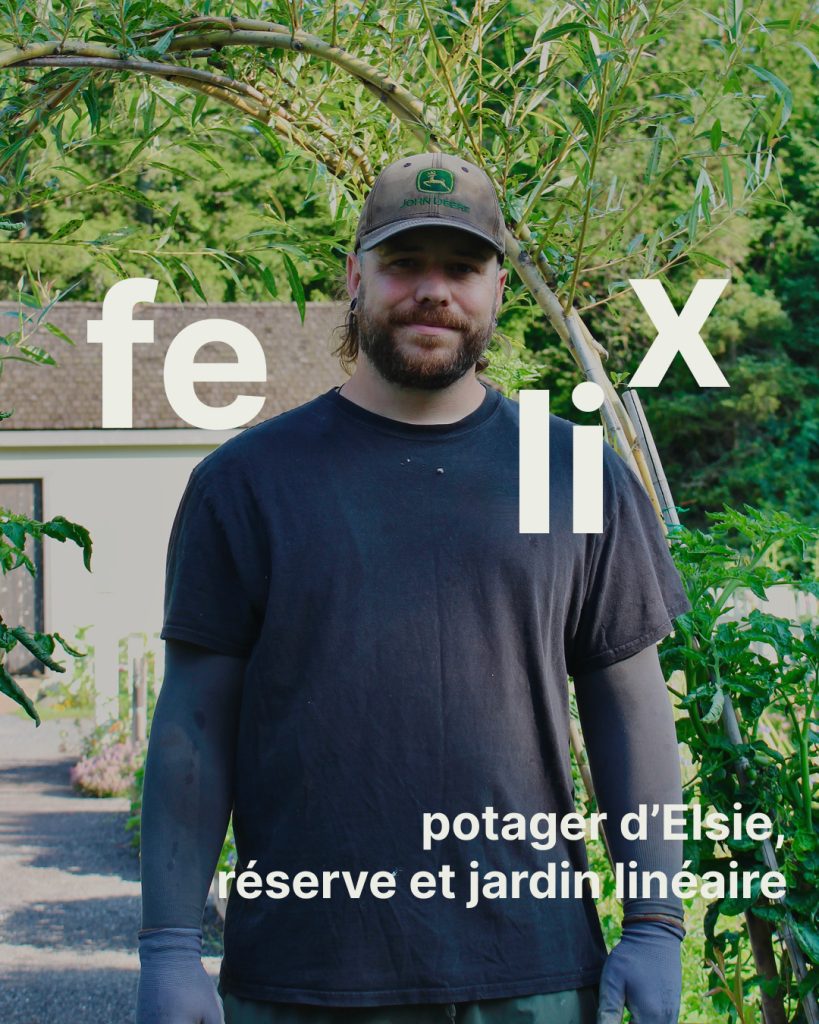
Today, Félix Claessens-Matte cares for this part of the Gardens. His story with the Jardins de Métis began in 2020, following his internships, when he joined the team as a gardener’s assistant. The following year, he became the gardener responsible for the Entrance Garden. Yet he made an unusual decision: he asked to return to the role of assistant gardener so he could take the time to deepen his skills before taking on responsibility for a section again.
That decision says a great deal about the kind of gardener he wanted to become.
For Félix, learning has never been just a step to get through. It’s a way of gardening.
Choosing to Learn
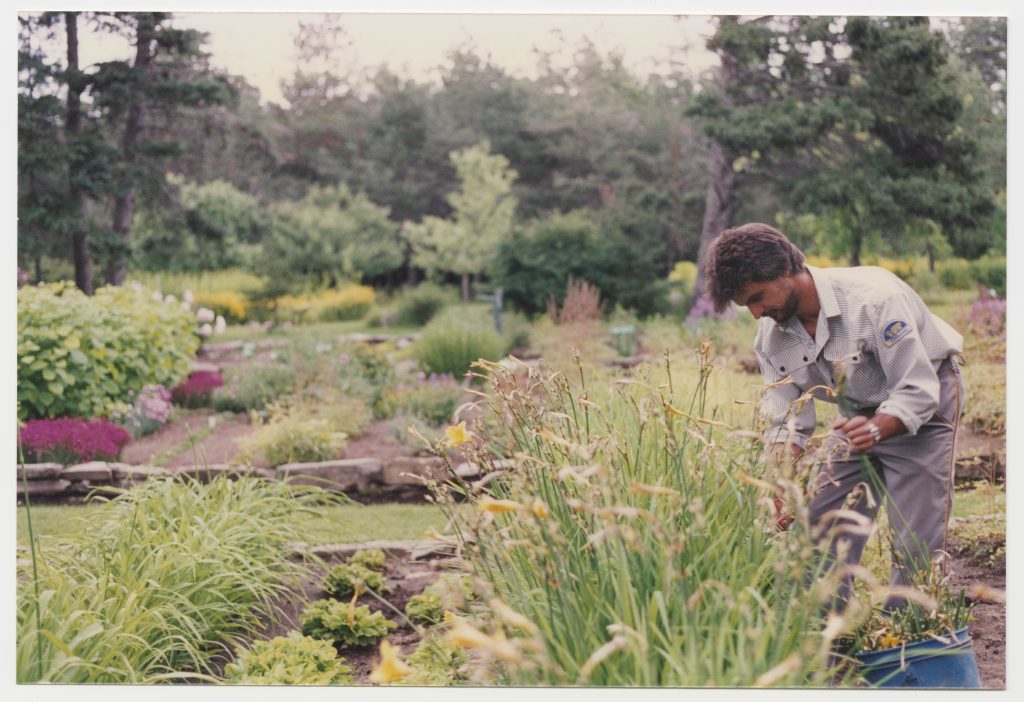
As the seasons passed, Félix honed the techniques specific to the Jardins de Métis.Marcel shared with him the techniques behind growing blue poppies, the precise steps for dividing and transplanting plants, how to build low stone walls, and that attention to small details that gives English gardens their elegance.
But above all, he passed on to him a way of thinking about the garden.
A garden that appears free, lush, almost wild… even though every detail has been observed, carefully considered, and patiently crafted.
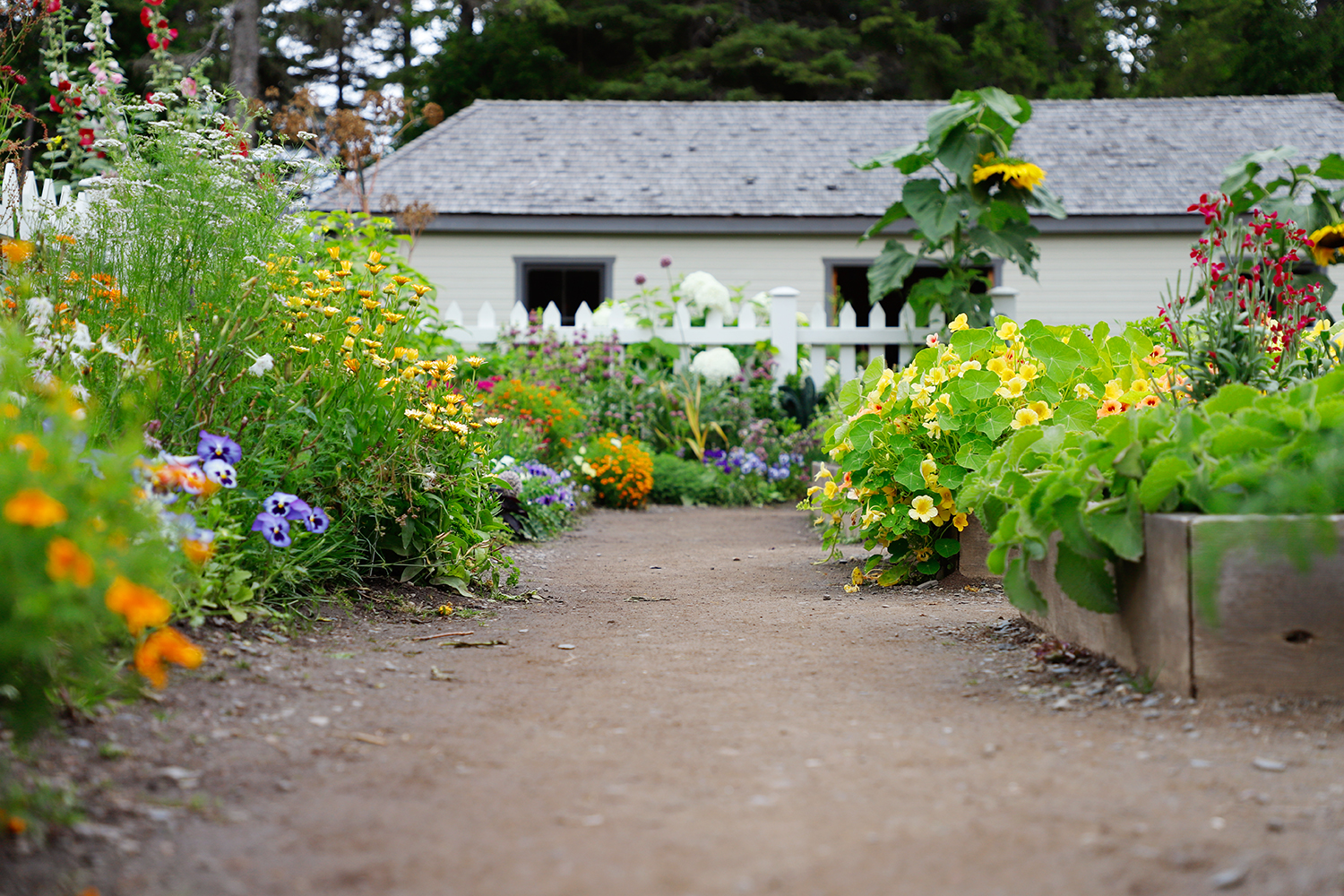
In 2023, he took on a position as a gardener again, this time as the gardener responsible for the Vegetable Garden. Since then, this vision has continued to guide his work. Today, what he particularly loves about the Vegetable Garden is precisely this blend of the practical and the beautiful. The cedar planters, the fences, the living willow arches… everything has been carefully thought out. It is a productive garden, certainly, but first and foremost, it is a garden.

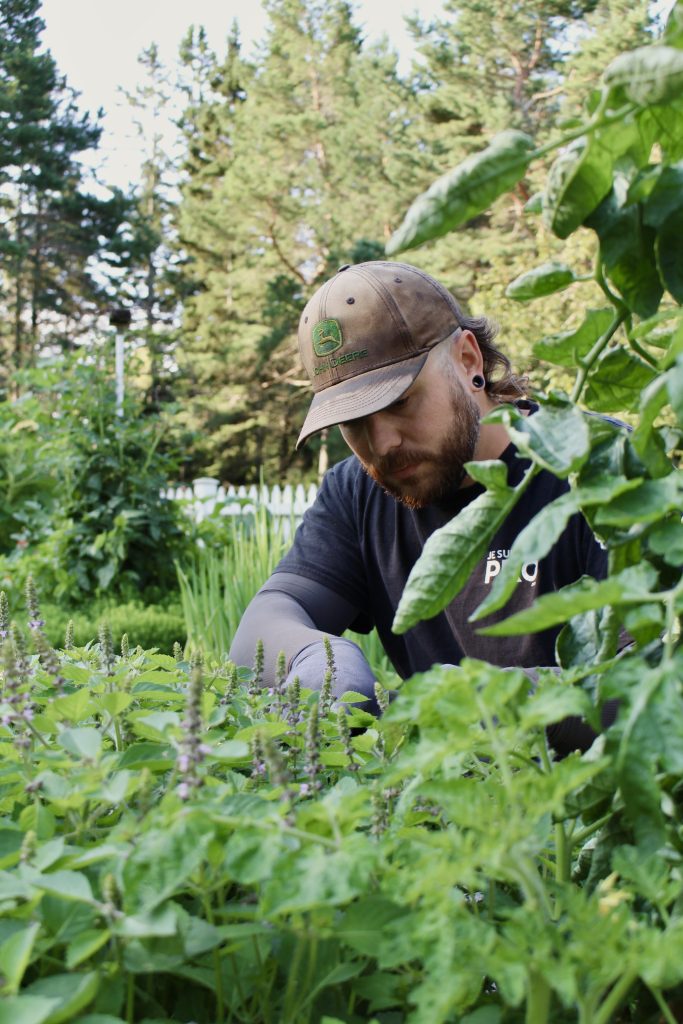
Potager, 2026. Photo: Frederique Martin
Félix travaillant au Potager, 2026. Photo: Frederique Martin
The Garden That Paved the Way
Long before it became the Potager we know today, this place was also Elsie Reford’s first garden.
It was here that she took her first steps as a gardener. Here, she grew vegetables, herbs, and cut flowers for the villa’s lush bouquets. Just a few steps from the Potager is another spot that visitors almost never discover: the Reserve.


Légende
Légende
In Elsie’s day, this was precisely where she propagated her perennials, kept plants waiting for a spot in the flowerbeds, and prepared plantings for future seasons. At a time when nurseries were scarce and far away, this reserve was a valuable resource. It allowed the Gardens to evolve constantly, while remaining true to their spirit.
Even today, some plants are only passing through. They’re simply waiting for the right moment to find their place elsewhere in the Gardens.
Légende
Passing on the Knowledge
The seasons come and go, knowledge accumulates… but there’s always more to learn as a gardener.
Like many others before him, Félix knows that the most valuable lessons often come from a shared piece of advice, a gesture he’s observed, or a conversation shared while working in the garden.
It is this same generosity that he now wishes to pass on to new gardeners.
To share the knowledge gained over the seasons.
PTo take the time to pass on those little things that aren’t found in any guidebook, but that help you find your place within a team more quickly.
Because a historic garden isn’t preserved by plants alone. It’s also preserved by the people who choose to pass on what they know.
As the Jardins de Métis celebrate 100 years of work, 100 years of beauty, and already look ahead to the next 100 years,, the Vegetable Garden reminds us that a historic garden doesn’t rely on its history alone. It lives through its ability to pass on knowledge.
To welcome.
To experiment.
To prepare for tomorrow.
By tending to the Vegetable Garden, Félix cultivates much more than vegetables, herbs, or flowers. He cares for a place where, for nearly a century, each generation of gardeners has quietly prepared the way for the next.
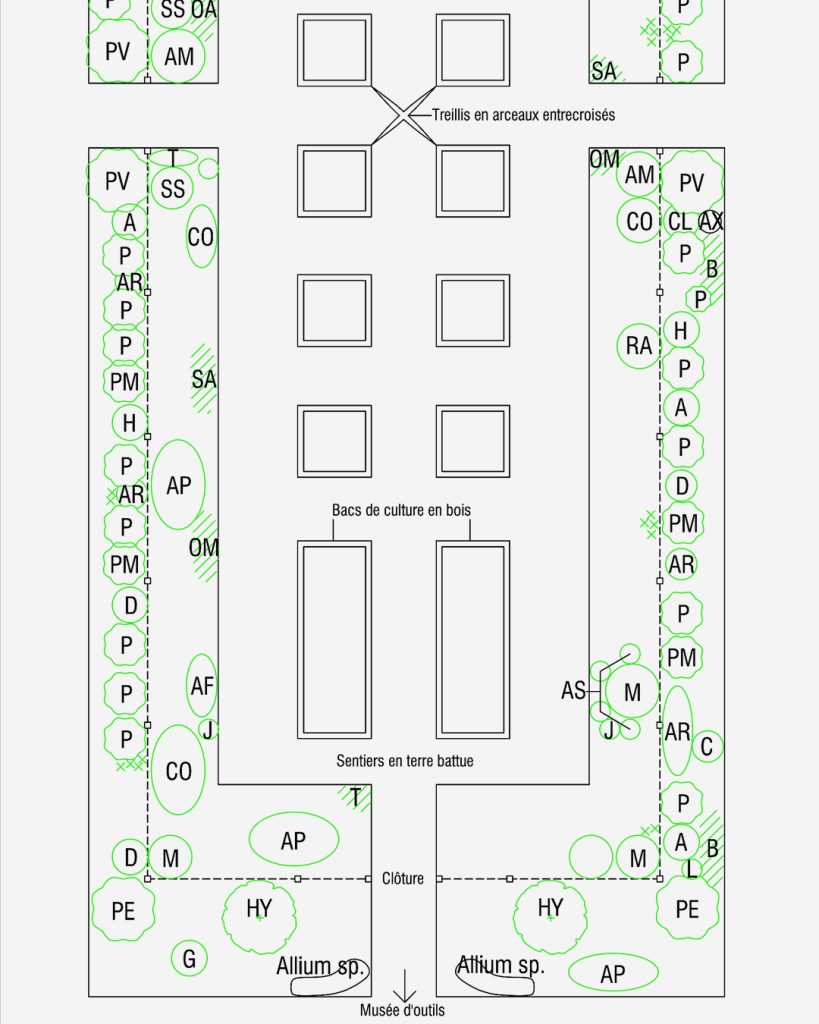
Plans du Potager par Cédrick Paquet
Félix au Potager, 2026. Photo et graphisme : Frédérique Martin
Come and meet Félix
The Vegetable Garden is much more than just a vegetable and herb garden.
On this guided tour, Félix invites you to discover the place where Elsie Reford took her first steps as a gardener, where plants are propagated, where ideas take root… and where generations of gardeners continue to pass down their unique expertise.
This tour will reveal the Gardens from a perspective rarely shared: that of the people who, season after season, are laying the groundwork for the next hundred years.
By reservation only—rain or shine
Limited spots available
THE GARDENER’S JOURNAL
Which plant is closest to your heart?Right now, I’d have to say the little sunflowers growing beside the Tool Museum. Otherwise, there are the rose bushes, which I really love… unfortunately, I don’t have any in my section! I’m also a big fan of tropical plants like orchids and bromeliads.
In your opinion, what’s the most beautiful time of year in your gardens?The Vegetable Garden comes into its own later in the season. By mid-August, the sunflowers and hollyhocks are in full bloom, and everything finally begins to feel lush. It’s finally starting to look lush! One of my challenges is finding ways to bring that sense of abundance earlier in the season.
What’s something visitors rarely notice?.People are often surprised by the abundance of edible flowers and medicinal plants. I often hear people say they didn’t know those were edible! It leads to lots of wonderful connections and interesting interactions with visitors.
What do you hope visitors take away from their visit?.I love it when people feel inspired as soon as they step into the Vegetable Garden. The vegetables aren’t planted in rows; there are shapes, curves, and companion planting… I want them to think, “I want to do that at home!”
