
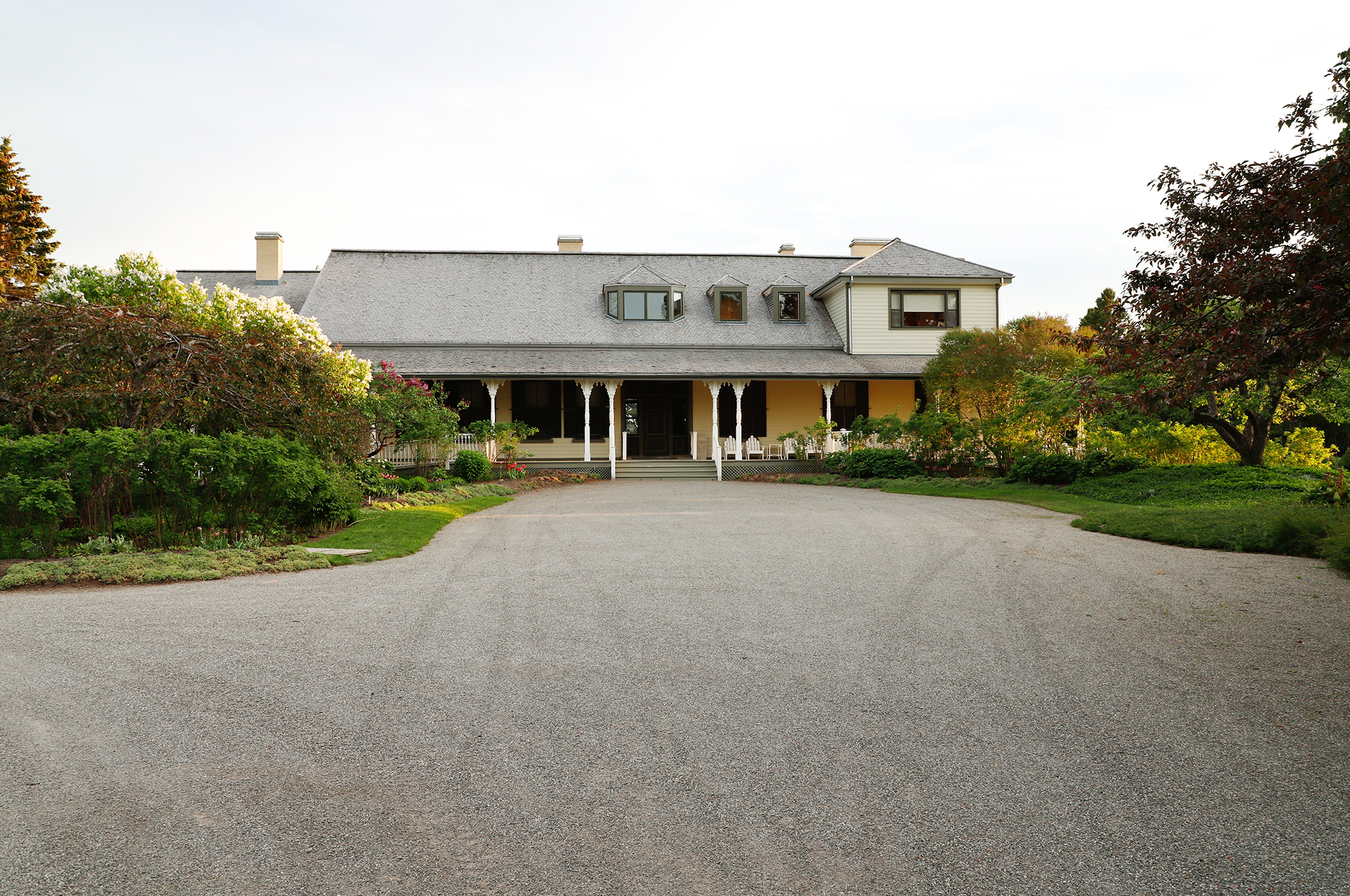
Preserving the Spirit of Place
It takes just a few steps around the villa to understand why this area is one of the most iconic areas at the Jardins de Métis. The Long Walk is bursting with flowers; carefully shaped mugo pines punctuate the landscape; peonies and daylilies bloom in succession on the terrace; and the Garden Cafe is filled with edible flowers, herbs, and aromatic plants that find a second life in the dishes and cocktails served at the Villa Estevan Lodge’s restaurant. A little further on, the Belvedere invites you to pau se and admire the St. Lawrence River. Everything seems as though it has always been there. Yet this landscape is the result of a century of patient work. Behind every bloom, every tree, and every stone wall lie generations of gardeners who, season after season, have shaped, maintained, and adapted this place so that it remains true to the vision imagined by Elsie Reford. Isabelle Couture has been part of this story since 1996. In nearly thirty years at les Jardins de Métis, she has watched plants mature, collections evolve, winters leave their mark, and horticultural practices change. Today, as the gardener responsible for the Villa area, she brings to her work a perspective shaped by experience—one that allows her to see not only the beauty of the garden, but everything that makes that beauty possible.


Isabelle working among the mugo pines; Allée Royale and Isabelle posing in front of the villa, 2026. Photography: Frédérique Martin
Among all the gardens designed by Elsie Reford, the Long Walk holds a special place. It is the only one conceived along a straight, formal axis. Nearly 90 metres long, it was inspired by the great mixed borders of Gertrude Jekyll, one of the most influential figures in English garden design. Here, the formality of the straight line contrasts with an abundance of carefully orchestrated planting. Nearly 400 species and varieties bloom in succession from spring through fall: lilacs, peonies, delphiniums, lilies, roses, phlox… all thoughtfully arranged so that the Long Walk never truly stops blooming. Even beneath visitors’ feet lies a piece of this history: the concrete paving slabs along the walk, designed by Robert Wilson Reford, still bear tiny shells from the sand collected on the beach below.
Elsie Reford posing in the Long Walk, around 1935. Photography: Robert W. Reford / Silver print / Collection of Les Amis des Jardins de Métis
Originally, the Long Walk drew the eye toward the hills of the North Shore. Over time, the trees have matured and this once-open view has gradually closed in. To catch sight of the St. Lawrence River today, visitors must continue on to the Belvedere. These trees now play an essential role in stabilizing the shoreline and slowing erosion. The landscape has changed, but the intention remains: to create a garden that inspires wonder, season after season. Yet all this abundance of plants is held within a carefully defined structure. On either side of the Long Walk, gently sloping borders are framed by stone walls. Visitors are naturally drawn to the flowers. Isabelle also sees what supports them.What the Flowers Don’t Tell Us
The stone walls lining the Long Walk often go unnoticed. Yet they have been an integral part of the landscape for nearly a century. Over the years, Isabelle has helped restore several sections, reusing the original stones whenever possible. The work is done in sections of two to three meters, each requiring nearly two weeks of labor. This is because, on either side of the Long Walk, two stones facing must be rebuilt with the same care. “The most important thing is the foundation,” she explains. Before the first stone can be laid, the base has to be solid. Then, each stone is selected, turned, adjusted, and carefully interlocked with the others to ensure the wall stability, while keeping each course at a consistent height. No mortar holds the stones together: everything relies on their balance and on the expertise of those who assemble them. Once the perennials are in bloom, the eye rarely lingers on this meticulous work. And yet, the walls quietly frame one of the Gardens’ most photographed scenes.A Living Landscape
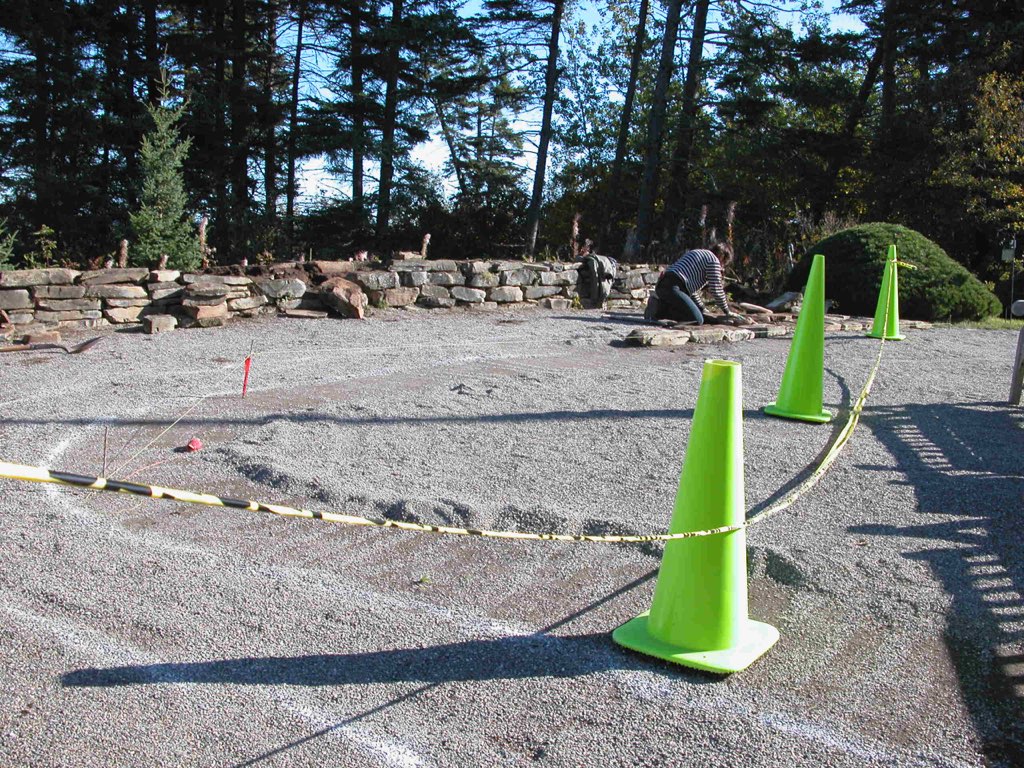
Isabelle’s work also involves managing changes to the landscape. In 2010, the dry-stone wall at the Belvedere was completely dismantled and rebuilt eight to ten feet farther inland, using the original stones. Situated atop a clay promontory, this area is subject to natural erosion that is slowly reshaping the riverbank. Preserving this site, therefore, does not mean fighting against the river, but working with it—by making decisions today that will allow visitors to continue enjoying this landscape for many years to come.Work to relocate the Belvédaire retaining wall, 2010. Photo: Patricia Gallant
Belvedere, around 1976. Unknown / Collection of Les Amis des Jardins de Métis

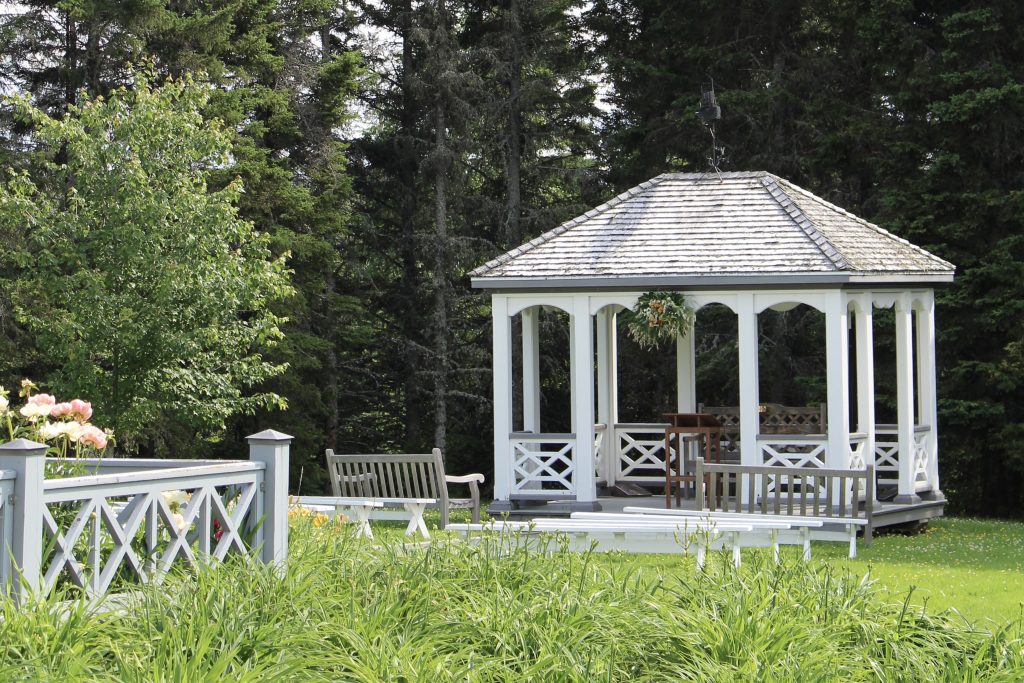
Robert W. Reford Pavilion, 2026. Photography: Frédérique Martin
As you stroll through the Villa area, it’s easy to marvel at the blooms or the carefully composed garden scenes. It’s harder to imagine the quiet work that has sustained them for a century! Perhaps this is the most beautiful legacy of generations of gardeners who have come before, making everything seems like it has always been there, even though each season requires observation, maintenance, adaptation, and, at times, reconstruction. A beauty that stems not only from the flowers, but from the patient’s hands that, for a hundred years, have cared for this living landscape.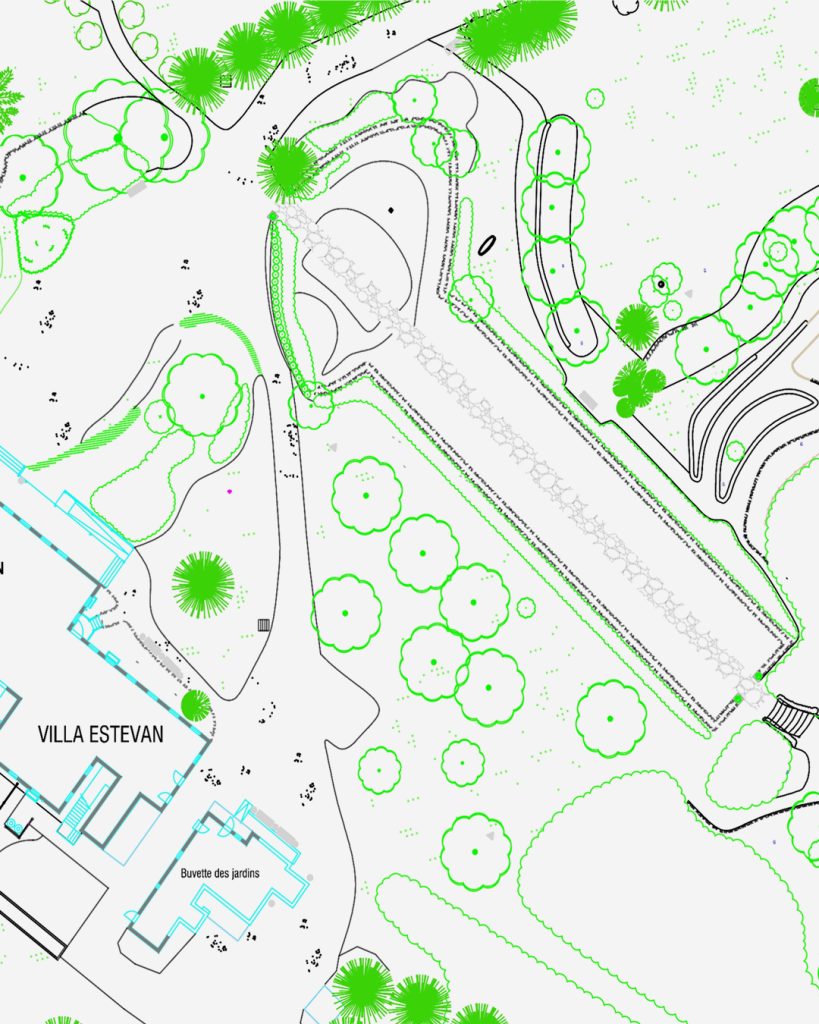

Plans of the Villa Area by Cédrick Paquet
Isabelle posing in the Long Walk, 2026. Photo: Frédérique Martin
Come and meet Isabelle
Join Isabelle for a walk through the Villa area and discover the garden through her eyes. From the exuberance of the Long Walk to the small, everyday details, Isabelle will share her experiences, anecdotes, and some of the secrets behind the beauty of this place. This is a special opportunity to ask questions, talk about gardening, and spend time with someone who has been part of the Jardins de Métis for nearly thirty years. Reservations required — rain or shine Limited spots availableTHE GARDENER’S JOURNAL Which plant is closest to your heart? Gillenia (Gillenia trifoliata) ! It’s a little-known perennial that almost looks like a small shrub. When it blooms, it’s like a little field of stars! In your opinion, what’s the most beautiful time of year in your gardens? People often think the best time is peony season… but personally, I prefer spring, when you can really see the groundcovers… or else, the end of the season (even in fall) to see the phlox! What’s something visitors rarely notice? For me, it’s moving the stone wall at the Belvedere. There were just two of us working on it: Anne Lévesque and me. I can still picture us with a pickaxe, a hand truck… It took us almost a month! What do you hope visitors take away from their visit? I’ve always been really afraid of the “pizza” effect — when there are too many little patches of color scattered everywhere. In the Long Walk, there’s a lot of diversity, but we work mostly with pastel tones, and I’m working on extending those patches of color to make it even more beautiful! For me, the Long Walk has to be a ‘WOW’ in every season.
